Let us know if you would like to contribute a short memorial for someone who made a significant contribution to the Common Study Programme and the study of Critical Criminology in its many facets in their lifetime please send a write up and potentially a photograph for inclusion.
Fritz Sack(1931-2025)
Pioneer of radical critical criminology

Foto: Gudrun Drews-Dahl
We mourn the loss of Fritz Sack, our long-standing academic companion, colleague, and friend. Fritz Sack was the founder of social science-based criminology, also known as critical criminology, in Germany. As a professor of criminology, he headed the Aufbau- und Kontaktstudium, later the Institute for Criminological Social Research at the University of Hamburg, from 1984 until his retirement in 1996.
Inspired by American sociology, particularly the Chicago School, Fritz Sack applied its insights to criminology in Germany: People are not inherently criminal; they become so through powerful societal discourses and legal framings. The question Fritz Sack therefore insisted on asking was: under what conditions do societies come to address their problems through criminal law, thereby inevitably individualizing them? For him, criminology always belonged to sociology, not to jurisprudence, which traditionally regarded it as a kind of administrative arm.
Fritz Sack was one of the founders of the Society for Interdisciplinary Scientific Criminology (Gesellschaft für interdisziplinäre wissenschaftliche Kriminologie GiwK), which opened up the possibility of research funding for the field, and he established the Institute for Prevention and Security Research (ISIP e.V.) in Hamburg, which served as an interface between science and institutional practice.
Through his two degree programs, Fritz Sack has shaped and inspired generations of students. We got to know and appreciate him as someone who always sought discussion and challenged others. Anyone who wasn’t up to speed on the latest news by 8 a.m. was at a disadvantage. Fritz Sack worked tirelessly, also for his students: he was a sensitive person who easily recognized the questions that preoccupied his students and always supported them in their respective projects. He generously used his ability to encourage and promote the work of those around him.
In the very best sense, Fritz Sack was also a Francophile, appreciating the country’s intellectual tradition, its enchanting cities and landscapes – and its excellent red wine. He dealt with a wide range of topics, from terrorism research, with which he made a name for himself in the 1980s, to “punitivity,” the increasing willingness to punish in neoliberal societies, a topic that concerned him greatly. While other topics are in the foreground today, his legacy — his critical spirit in academia — will live on. Fritz Sack died on August 18, 2025, at the age of 94. We will remember him fondly.
Susanne Krasmann, Christine Hentschel, Nils Schuhmacher and Bettina Paul, University of Hamburg
Zum Tod des Kriminologen Fritz Sack: Jenseits des Straflustprinzips | taz.de
Marc Cools (1962-2025)
Erudite, Freethinker, Bon vivant
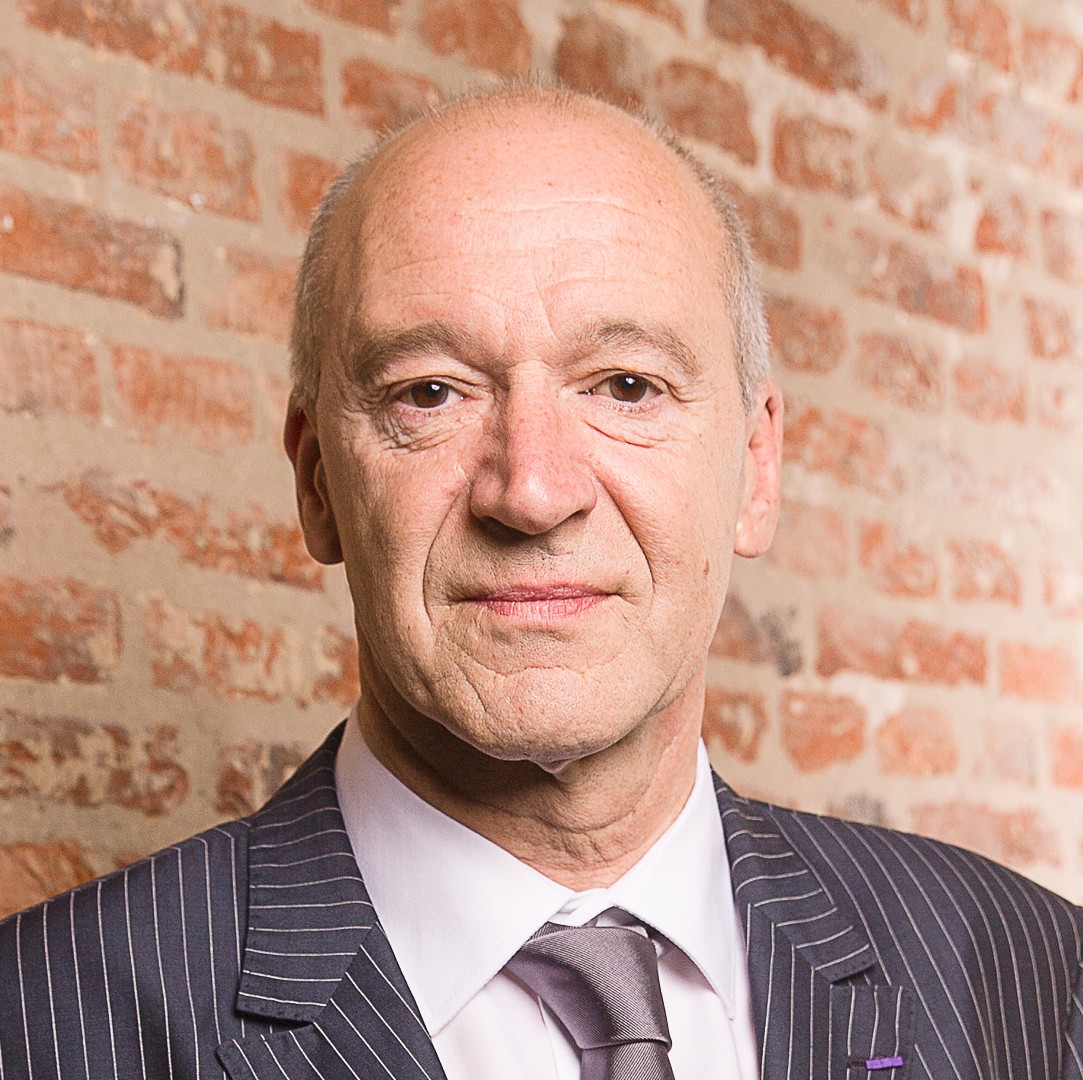
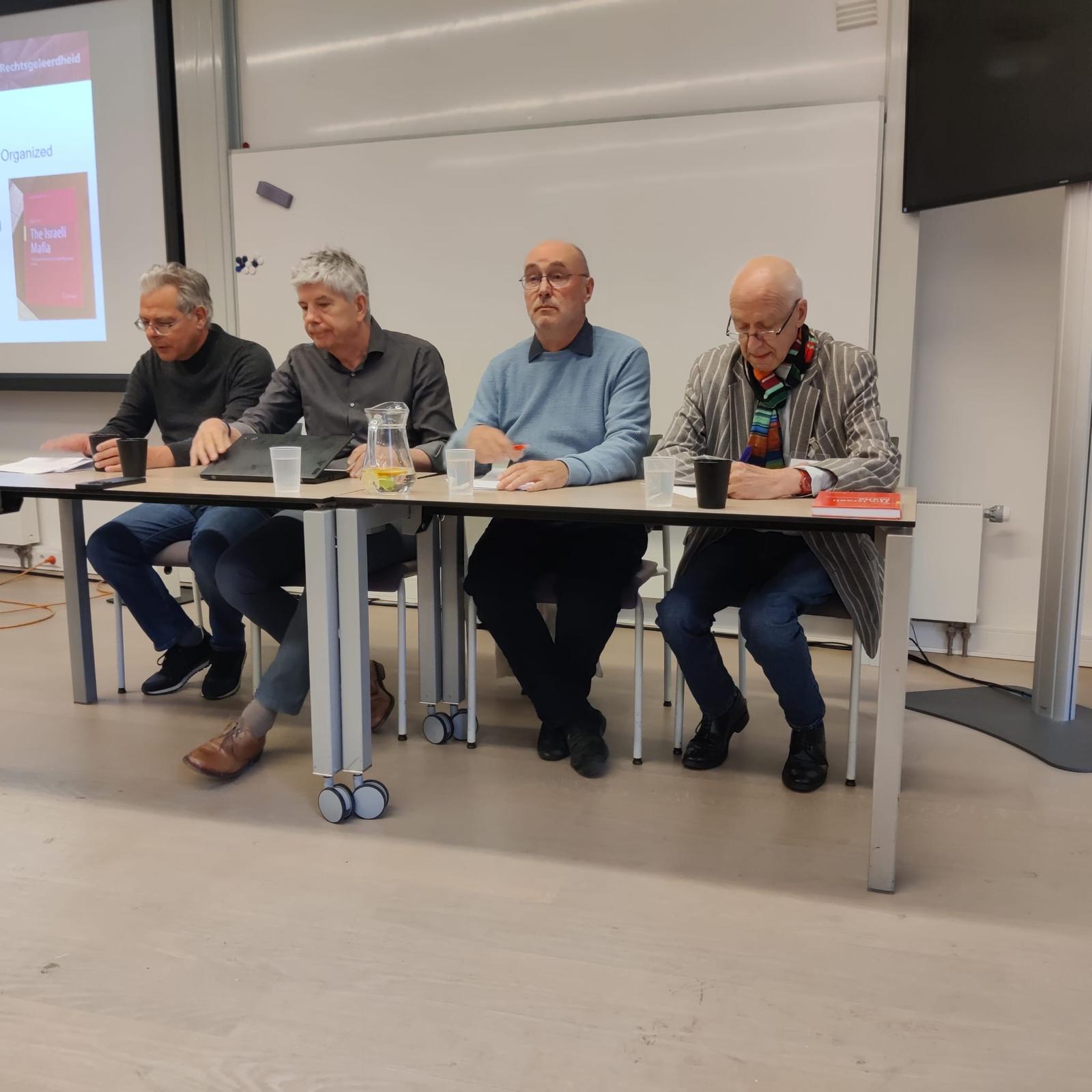
When it became clear that Marc Cools could not attend the common session of 21-23 May 2025 at his own university Ghent, we knew that this was not good news, but that he would die only two weeks later, on 10 June 2025, two days before his birthday… we did not expect that. We knew he was ill, but still on 16-17 April he participated in a panel at the Culture, Crime & Global Challenges conference in Utrecht. That would turn out to be his last professional performance; That is why we would like to attach a photo of that particular panel.
Marc was not only a brilliant criminologist, but also a human being who left an indelible impression with his sharp intellect and warm personality. His erudition knew no bounds; He moved effortlessly between criminological theory, philosophy, history and social analyses. He had a special gift for making complex issues accessible, without losing depth. But above all, Marc was someone who embraced life—a freethinker who wasn’t afraid to ask critical questions and think outside of conventions.
What also made Marc so special was that everyone liked him. His keen observations and critical arguments were always accompanied by humour, kindness, and a deep-seated respect for others. He knew how to share his knowledge without pretension, to express his criticism without harshness. He could have a conversation with academics, politicians and policymakers, but just as easily with students, brothers of Freemasonry or friends at a café table. His smile and open attitude made him accessible, his sincerity made people feel heard.
In addition to his scientific brilliance, Marc was known as a bon vivant pur sang. He loved a good glass of wine, in-depth conversations and pleasant evenings in which, in addition to theory, there was always also room for laughter and relaxation. His friendships were real connections, built on trust and mutual respect.
An extensive interview with Marc will soon appear in the Dutch-Flemish journal for cultural and critical criminology: Tijdschrift over Cultuur & Criminaliteit. This also shows that his legacy goes beyond publications and academic contributions; he lives on in the people he has inspired, in the colleagues who continue to follow his thinking, and in the friends who will never forget his warmth.
Marc, your energy, intellect and humanity remain with us. Rest in peace, friend.
Dina Siegel and René van Swaaningen
Vincenzo Ruggiero (1951-2024)
The life and work of Vincenzo Ruggiero, had been a Professor of Sociology at Middlesex University where he worked for more than 30 years: Criminologists and graduates herald ‘visionary’ MDX academic Vincenzo Ruggiero at inspiring memorial | Middlesex University
Roger Matthews (1948-2020)
Reflections on the life and work of Roger Matthews, by Julie Bindel: https://www.theguardian.com/law/2020/apr/21/roger-matthews-obituary
Vassilis Karydis (-2018)
Commemoration Vassilis Karydis, DCGC conference Utrecht, 28 June 2018 — by René van Swaaningen
Not for nothing, tragedy (Τραγωδία) is originally a Greek word, just like catastrophe (καταστροφή). Yet again we have to say goodbye to one of our dearest comrades from the common study programme on critical criminology.
I know Vasilis since ‘the Greek connection’ with the common study programme was established in the mid-1990s. Ever since, when nobody seemed able to organise a common session – which was not seldom the case in autumn – Vassilis always helped out, by offering to have a next common session in Athens or Corinth. Obviously, this was welcomed by everybody, since all of us like to come to Greece, but also because, particularly during the years the austerity measures hit Greece the hardest, to ascertain that the ‘Greek connection’ was alive and kicking. And: Vassilis was always a great host, not only academically, but also when it comes to good food and tasting some good ouzo and tsipouro. Last autumn in Corinth I had the pleasure of sharing quite a bit of these goodies with him.
In the emails that were sent around after Vassilis passed away, it was often mentioned what a nice human being Vassilis was: and right so! I have seldom known an academic who is so immediately sympathetic, keeps far from the ego-mania that is so prevalent in academia and yet has an unmistakable presence, that cannot be overlooked.
In fact, all these emails have something ironic to it: Vassilis never used email – neither PowerPoint, nor did he have a smartphone… at least not to my knowledge.
Entering in his beige-brown raincoat, a bit like inspector Columbo did in the TV-series from the 1970s, Vassilis always starts his lectures browsing through his papers in a gawky way, seemingly not knowing how to begin, but once he starts, he always has a very clear message. Sometimes someone else made a PowerPoint presentation for him, even with video clips of for example the Greek fascists of Golden Dawn (Χρυσή Αυγή) smashing market stalls of immigrant vendors. Man, how outraged this made him! During his last common session, last April in Canterbury, he was quite pessimistic about the way the virulent racism of Golden Dawn had permeated mainstream Greek society.
The Greek kleptocrats in government and the business community made him equally angry: yet another Greek word (κλεπτοκράτες)! Vassilis was not always so nice and easy going! Not surprisingly for a man who, if I am not mistaken, was a lawyer of the Revolutionary Organisation 17 November (Επαναστατική Οργάνωση 17 Νοέμβρη), that strived for a violent turnover of the political and economic system in the aftermath of the Greek military junta in the mid-1970s. My best ‘Vassilis-experience’ in this respect was during a common session in Athens, in the early days of the crisis of the 2000s, when a member of the parliamentary commission of enquiry on corruption, more particular on the Siemens case, held a talk in which she explained the fact that the committee had not been able to achieve much, because it had so little means, was met by a particularly fierce Vassilis Karydis, who argued they were mere cowards, who simply did not dare to hold all these powerful kleptocrats involved accountable.
Politics and Vassilis Karydis were never very far from each other. This was not only reflected in his academic work on Visions of Social Control in Greece from 2010, Penal Incarceration and Rights from 2011 and Moral Panics, Power and Rights from 2015, of which I could unfortunately only read a bit, since most of it was in Greek – and the ancient Greek I had at school turned out to be of little use in this respect – but also, and maybe even more importantly, in his function as a member of law-making committees at the Greek Ministries of Public Order and of Justice, of the Council of Europe’s Committee for the Prevention of Torture, Degrading and Inhuman Treatment, of the Greek Central Scientific Council of State Penitentiaries (KESF), of the Hellenic Migration Policy Institute (IMEPO), and last but not least as the Greek Deputy Ombudsman of human rights since 2010 and acting Ombudsman since 2015.
In this latter quality, I really came to realise how important this modest man actually was. In 2015, our Rotterdam criminological student organisation CIA (Criminology In Action) had planned a study trip to Athens. The theme was to be ‘the migration crisis’. Initially, they met especially a lot of closed doors, when they planned visits to for example an asylum seekers’ centre, the Hellenic coast guard and Frontex, the aliens police and a migration court… until I decided to drop Vassilis a line. Then literally all doors opened: we were warmly welcomed everywhere! And after some interesting discussions at the office of the Greek ombudsman, we were guided through the strongholds of both the Greek fascist movement and the anarchists’ territory Exarchia (Εξάρχεια) by Iannis Boutselis, a researcher at the ombudsman’s office, who was very knowledgeable about Greece’s recent political history and presence and a great host. Thanks to Vassilis, this was one of the best study trips we ever had! I am sure our Rotterdam PhD candidate Marilena Drymioti will profit a lot from the warm contacts with the Greek ombudsman for her research on the violence that arose in Athens during and after the political and ecomonic crisis, even when Vassilis can no longer be a member of her doctorate committee; as had been the plan.
As acting Ombudsman, Vassilis also signed an agreement with us, connecting the Greek Ombudsman’s Office to a new Research Master’s programme on Border Crossing, Security and Social Justice, we are establishing currently from Rotterdam, together with the universities of Bologna, Ghent and Kent. Vassilis successor as Deputy Ombudman for human rights, George Nikolopoulos, has consolidated this connection last May with a visit to Rotterdam and thereby our bond with with Vassilis Karydis.
I am very greatful to have known such a warm and erudite person as Vassilis Karydis, who I truly consider a friend.The most appropriate word that comes to my mind as a goodbye is: yamas!
Jock Young (1942-2013)
Reflections on the life and work of Jock Young, by Keith Hayward and Roger Matthews: https://www.theguardian.com/education/2013/dec/04/jock-young
Louk Hulsman (1923-2009)
“The Rotterdam penal law and criminology professor emeritus Louk Hulsman died on the 28th of January 2009 at the age of 85. He was, apart from Nils Christie and Thomas Mathiesen, one of the most important penal abolitionists worldwide. Louk was also the director of the Rasphuys Institute and was, amongst other commitments, a leading member of the European Group for the Study of Deviance and Social Control, the Netherlands representative of ICOPA [International Conference on Penal Abolitionism] as well as Chair of The Coornhert League for the Reformation of the Criminal Law.
In the Netherlands, Louk is regarded as the founder of liberal drugs policy as his influential work and stance contributed significantly to the alteration of the Opium Act in 1976. His most influential publications include the Report on Decriminalisation (Council of Europe, 1980) and Peines perdues. Le systeme penal en question (written together with Jacqueline Bernat de Celis, 1982). He is perhaps most well known for “Critical criminology and the concept of crime” which was first published in 1986 and has been widely reproduced since.”
–Dr. Andrea Beckmann, Senior Lecturer in criminology, University of Lincoln
An Interview with Louk Hulsman by Iñaki Rivera 2004 (20th Annual Common Session)
Mike Presdee (1944-2009)
On 10 July 2009 University of Kent Criminologist Mike Presdee passed away after a long battle with cancer. Mike was an active contributor to the growing field of cultural criminology for which his unique take on the nexus of youth culture and its criminalisation was a natural fit. With an intensity honed as a Royal Marine and youth educator Mike’s writing was as vivid as it was penetrating. As we remember Mike as an active contributor and advocate of critical criminology in all of its manifestations we are reminded to not only look for the subterranean forms of resistance and carnival in the environments that surround us but to actively engage with the fete of modern life for that is where this work of ours comes alive.
Reflections on the life and work of Mike Presdee, by Jock Young: https://www.theguardian.com/education/2009/aug/20/obituary-mike-presdee
Sandro Baratta (1933–2002)
Reflections on the life and work of Alessandro (Sandro) Baratta
 Common Study Programme in Critical Criminology